The story outside the frame · HELLOYEARS BLOG
What can a memoir hold that a photo album can’t?
A photograph keeps the moment in view. A story can tell you who was there, what happened just before it, and why it still matters.
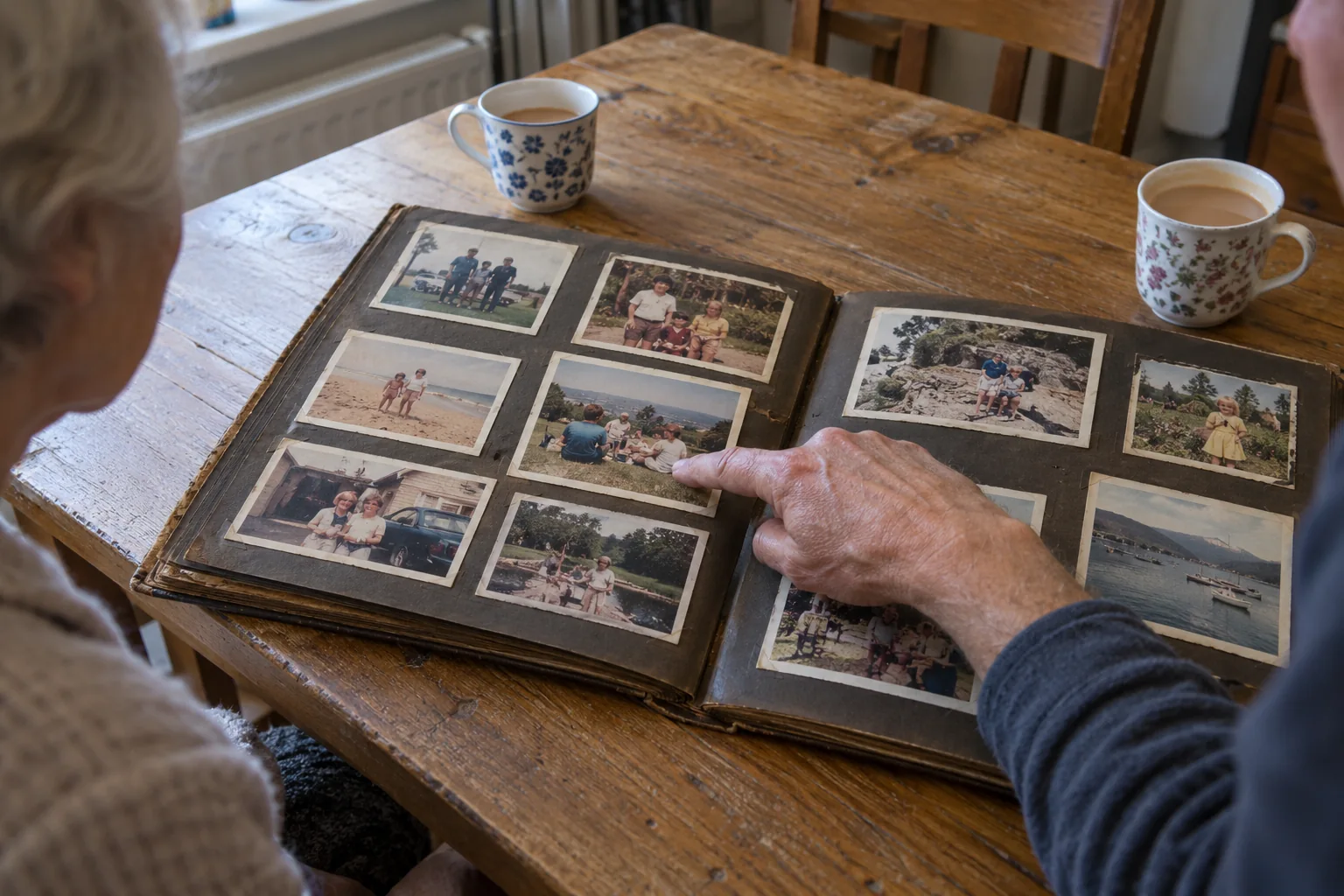
The picture is a beginning
A family photograph can be wonderfully familiar and strangely mysterious at the same time.
You recognise a face. You do not recognise the street. You know roughly when the picture was taken, but not why everyone was together that day.
Looking at it, you may want to ask the person who was there: What do you remember about this?
A memoir gives their answer a place beside the photograph. The picture remains the picture, with a little more of its world around it.
Names are only part of the caption
“Mum, summer 1978” identifies a person and a time. It may not tell you what that summer was like.
A useful caption might explain where she was living, who took the photograph, or why she remembers the dress. A longer passage can tell the story that led to the moment.
For a group picture, identifying people from left to right helps future readers understand who they are looking at. Those names should come from someone who knows, with uncertainty left visible when necessary.
HelloYears can analyse visible details in an uploaded photograph to help begin the conversation. The storyteller confirms identities, relationships and the story; AI cannot infer a person’s life from their face.
The memories with no photograph
Some of the best stories happened when nobody had a camera ready. A conversation on the way home. A workplace joke. The first evening in a new house before anything had been unpacked.
Those memories do not need a matching photograph to belong in a book. A page of words can hold them on its own.
If you would like an existing photograph restored, our team can discuss that during book preparation. Any AI-created or reconstructed image should be clearly identified as an illustration, rather than presented as a historical photograph of something that really happened.
A voice changes how a story feels
A printed paragraph can preserve the wording of a memory. The original recording can preserve the way someone tells it.
You might hear a laugh before the explanation, or a pause while they decide how to describe something. Familiar pronunciation and small turns of phrase can make the story feel close to the person who shared it.
For the book, selected original recordings can be reached through QR codes. These are the storyteller’s recordings, not an AI voice reading the edited text. The spoken version and the written chapter may therefore differ.
Decide which recordings you are comfortable sharing with the people who will receive the book, and check the QR links in the print preview.
Keep the context with the photograph
As your book is prepared, stories and photographs can be placed together where they make sense. A childhood picture may fit beside a school memory; a family gathering may belong in the chapter about a move or a reunion.
You review the complete PDF, including photo placement, captions and audio QR codes, before approving printing. If a name is wrong or an image feels out of place, you can request a correction.
The aim is a book you can open without needing someone beside you to explain every page. And if that person is beside you, perhaps the page will give you something new to talk about.